
TDR , Volume 68 , Issue 3 , September 2024 , pp. 8 – 73
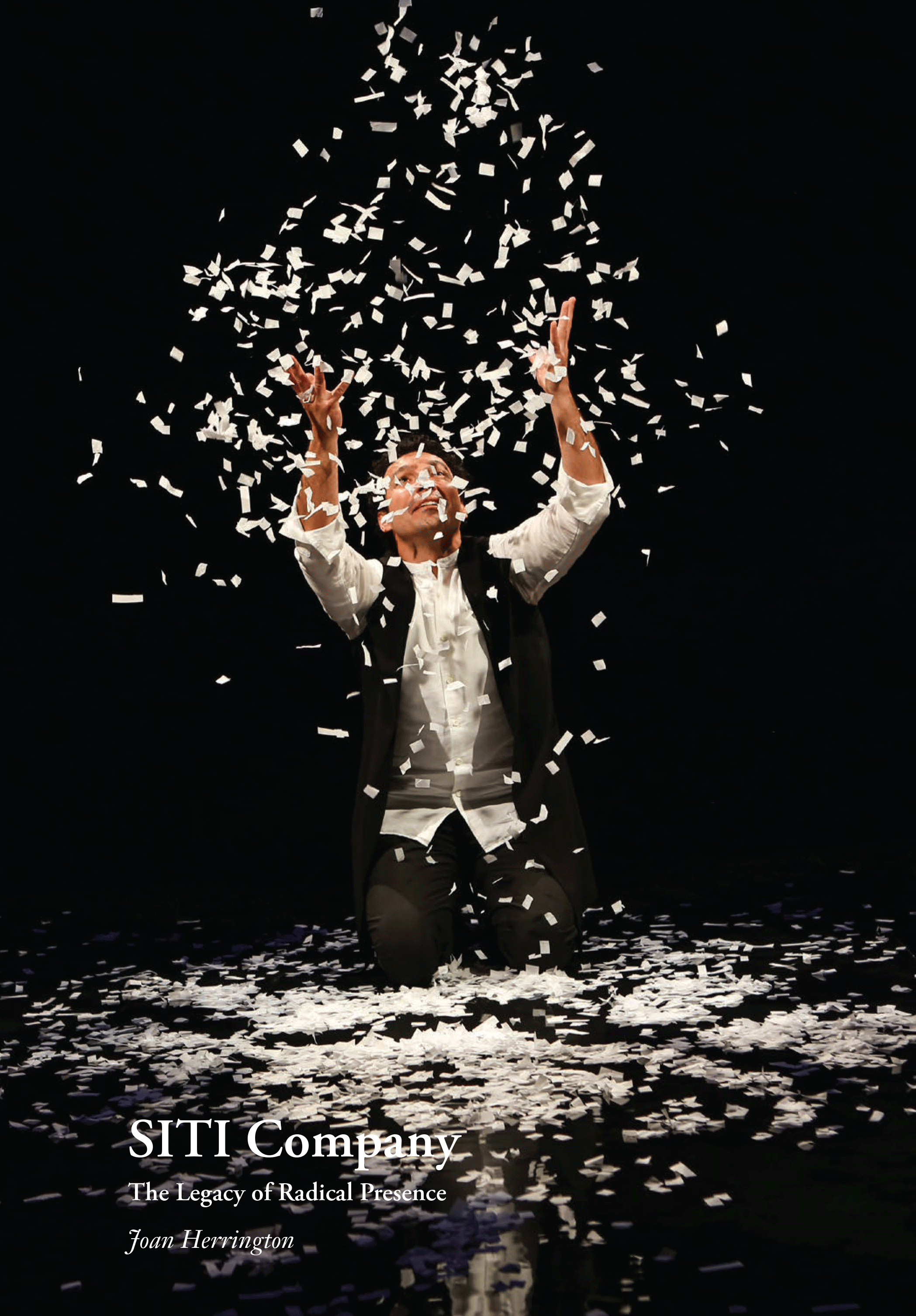
TDR (The Drama Review) September 2024 issue has a special section dedicated to the legacy of SITI Company, now available online as well as in print. Contributors include Joan Herrington, Christopher Staley, Motohashi Tetsuya, and Melissa Flower-Gladney.
“The spiritual sort of task of theatre artists is to actually be able to joyfully live a life in which your work disappears—there’s no trace of it. And people will encounter things that are like it, that were influenced on it, that built upon it and have no consciousness of you. Legacy is related to the ephemerality of theatre itself. Ultimately the legacy is to have an effect and then disappear.” —SITI member Leon Ingulsrud (2023)
Assemblage as a way to make art carries the expectation that existing elements will be combined with other existing elements to make something new, to expand impact, to enable new perceptions. One might argue that the SITI Company (Saratoga International Theater Institute, 1992–2022) were masters of assemblage. They were not the first acting ensemble, nor the first to devise new work or deconstruct classics. The training they taught came directly from Tadashi Suzuki and indirectly from Mary Overlie; and company members brought to SITI years of preparation from their professional careers. But together as an extraordinary ensemble, they took techniques and tools and literature and realigned, reimagined, and re-envisioned them. They created productions stunning to witness and offered life-changing training to the artists who worked with them. They redefined and edified the idea of a company and evidenced the extraordinary courage and rigor required to maintain the integrity and aesthetic of an ensemble.
The SITI Company consistently ventured into new territory, ensuring that their palette offered an array of challenges. With no brick-and-mortar home, they traveled the US and the globe. Self-described by company member Ellen Lauren as “a classical company wrapped in a post-modern bow” (in Rodriguez 2014), they devised new work and collaborated with dance companies; they created A Midsummer Night’s Dream (2006) and played with Noël Coward (Private Lives, 1998); they collaborated with visual artist Ann Hamilton (the event of a thread, 2012; and the theatre is a blank page, 2015) and choreographer Bill T. Jones (A Rite, 2013). They made Macbeth as a radio play (2004), envisioned and realized an opera (Seven Deadly Sins, 1998), and bounced the walls with Streb Extreme Action (Falling and Loving, 2019). They shifted from The Bacchae (2018) to A Christmas Carol (2022). Their flexibility as artists resulted from the clear structures in which they worked. With disciplined and vigorous mental and physical focus, they found what Artistic Director Anne Bogart termed “freedom within the form” (2019), bringing to their worktable and their rehearsal rooms the profound desire to question their artistry. Although the SITI Company no longer exists, their international impact has been exceptional.
Excerpt from Joan Herrington’s “SITI Company: The Legacy of Radical Presence“
Recent Comments